soooo, what's the problem and insight?
People know fast fashion harms the environment, but desire still takes over. Cheap, trendy clothes feel good now, but the impact is long-term. Every year, 92 million tonnes of textile waste end up in landfills, about 5% to 8% of all landfill waste. Most fast-fashion clothes are still wearable, but when people don’t want them, they donate or recycle them. The problem isn’t utility, it’s impulse and excessive buying.
The Idea!
A provocative campaign revealing where fast fashion really ends up, the landfill. If we can say no to plastic, why not say no to fast fashion? A bold and experiential campaign that pushes people to rethink desire and choose consciously.
Part 1: Physical Awareness Activation
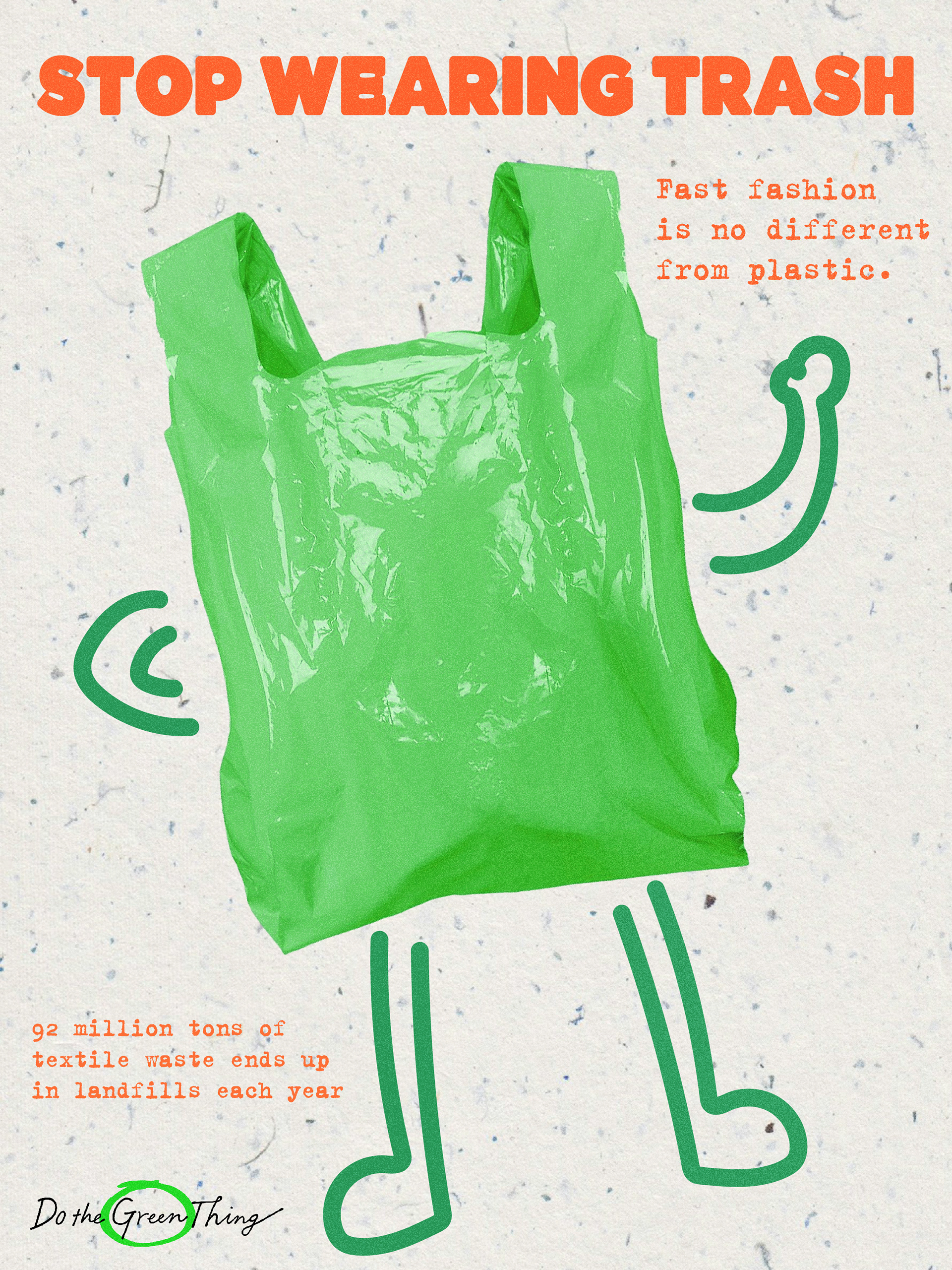
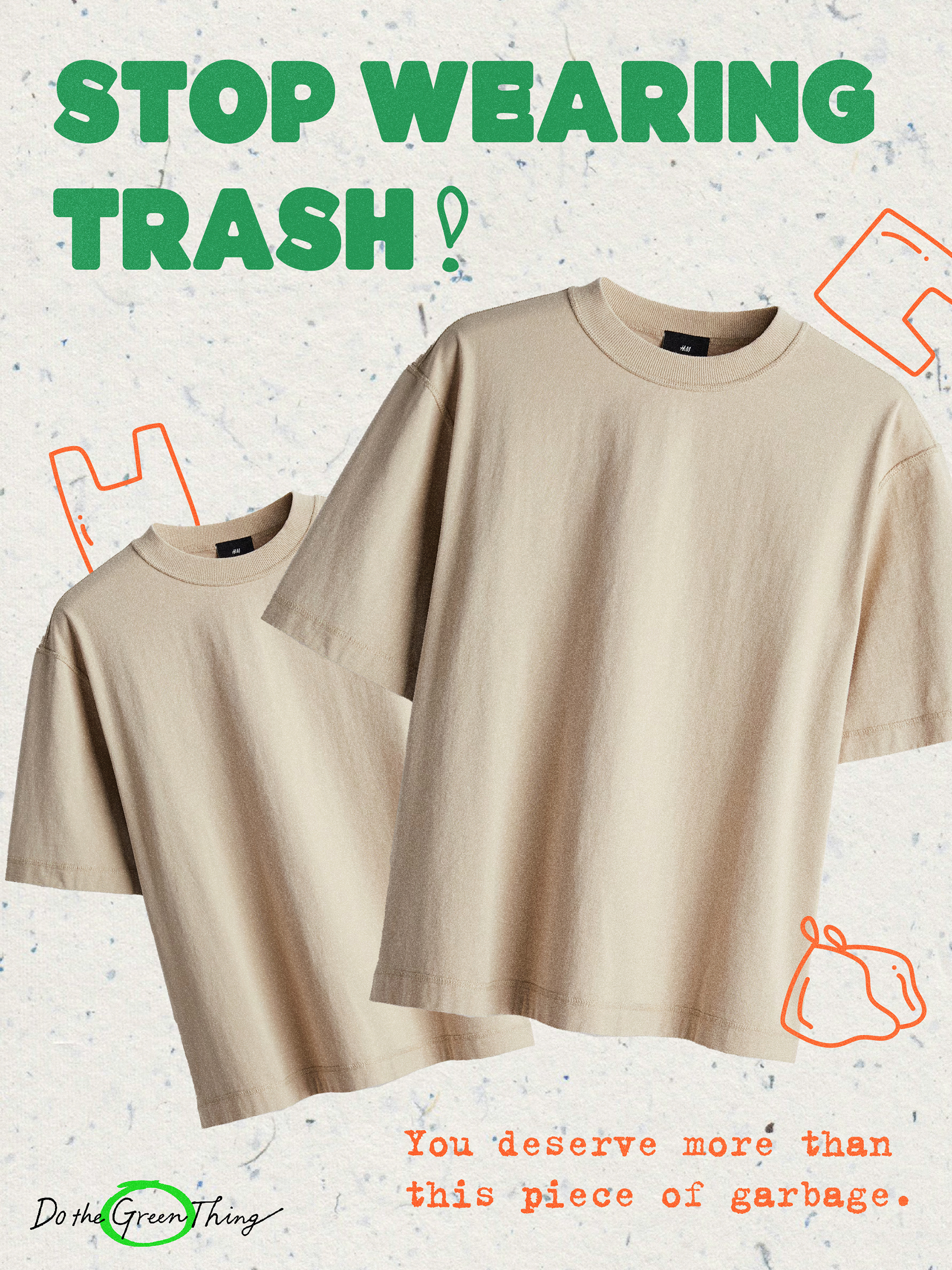
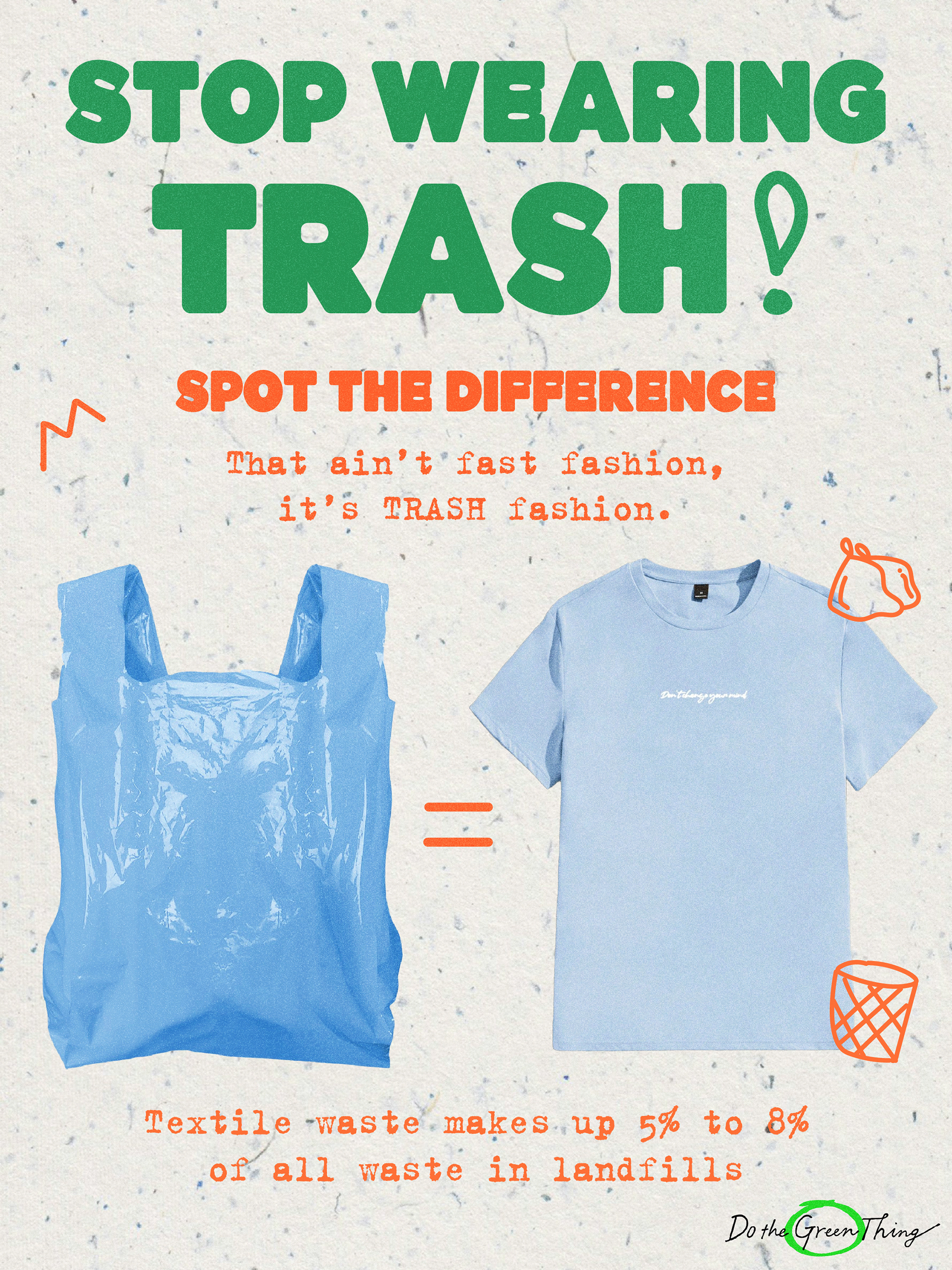
Posters
Guerrilla
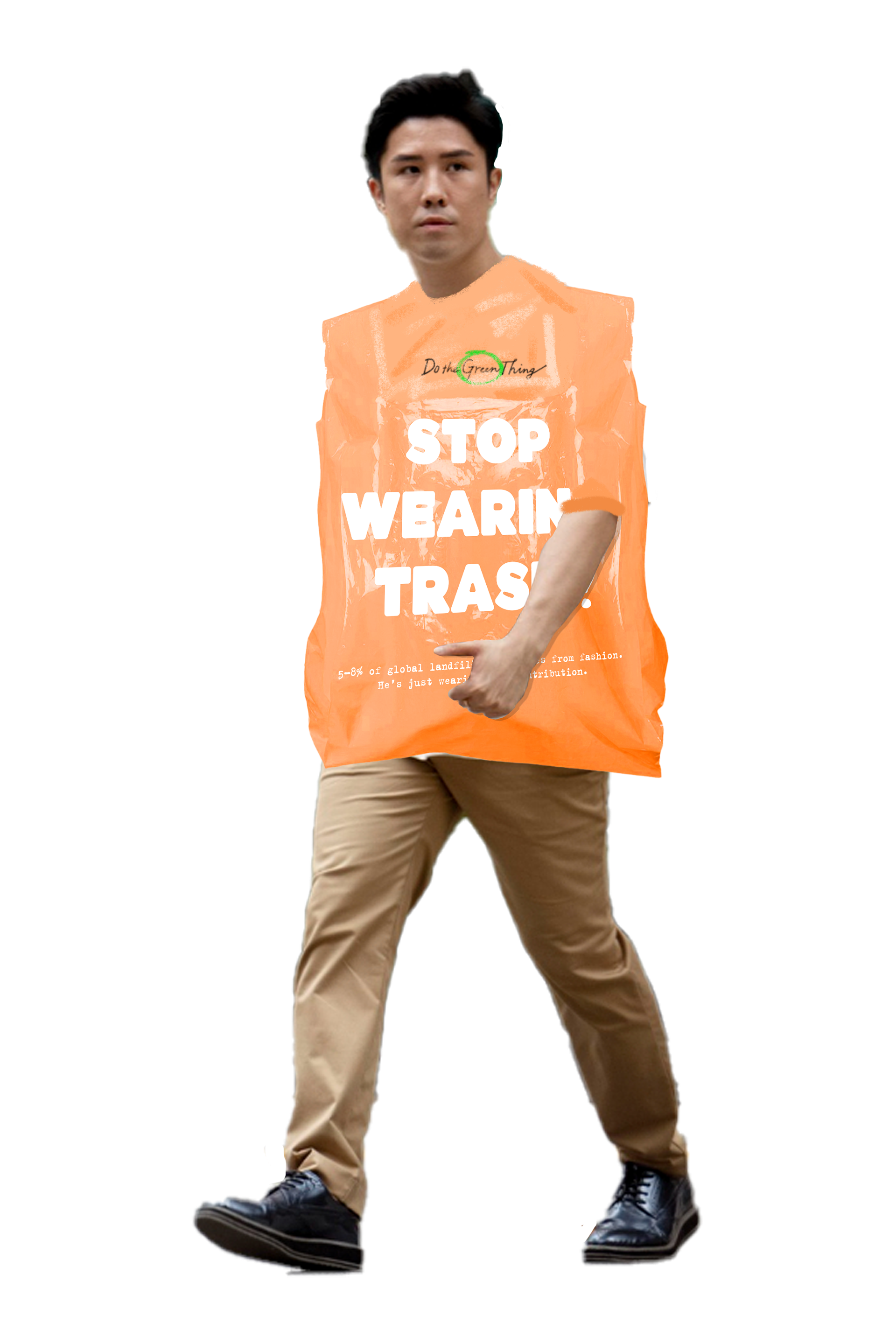
A man dressed in a trash bag with the bold statement ‘STOP WEARING TRASH’ printed on it will roam high traffic areas, visually symbolising that fast fashion is trash.
Experiential - Trash Closet
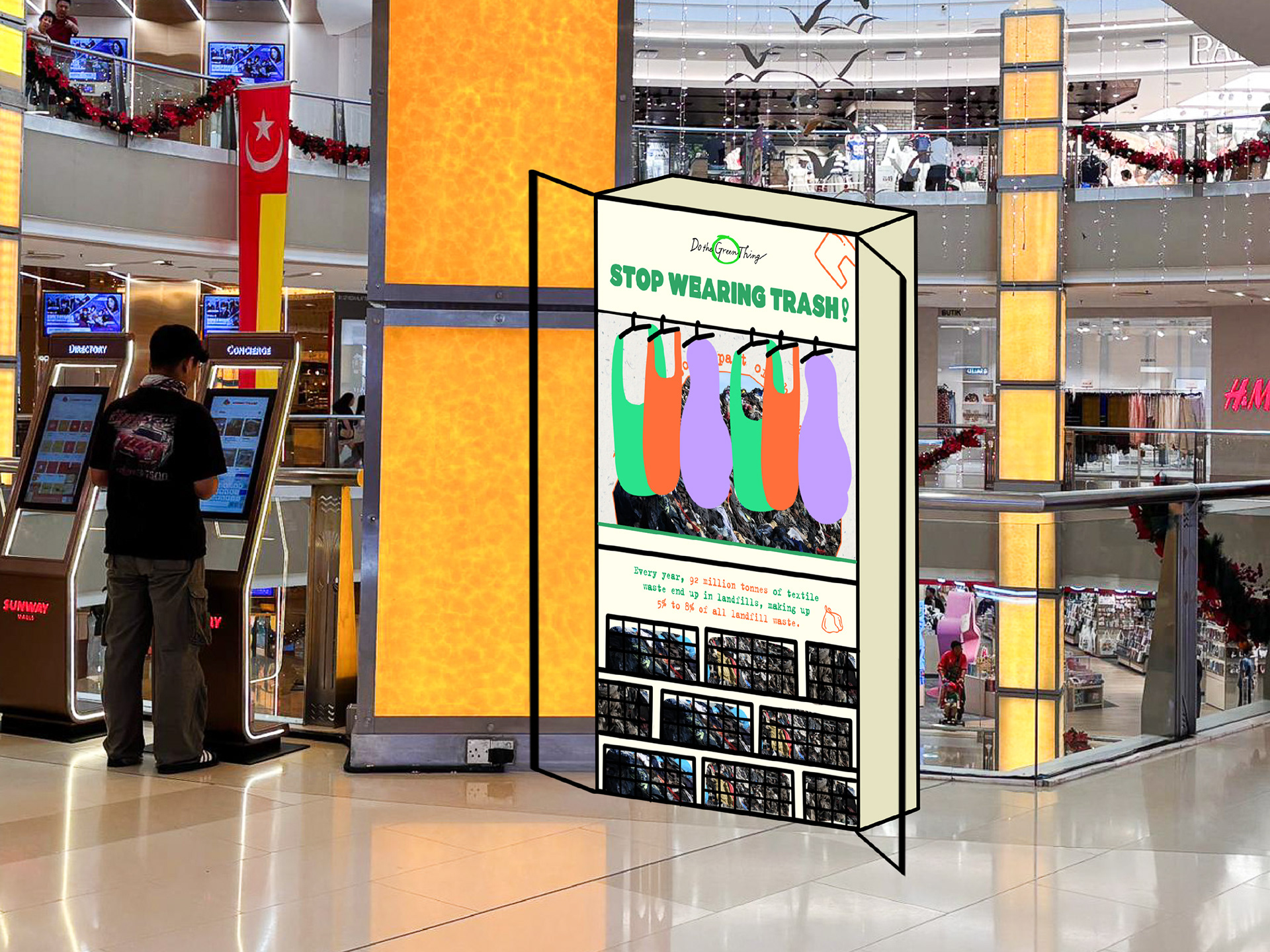
The trash closet installation has trash bags hanging to symbolise that our clothes are trash. The bottom has real textile fabrics from landfills, showing the fate of discarded clothes.
In Malls - Trash Bins
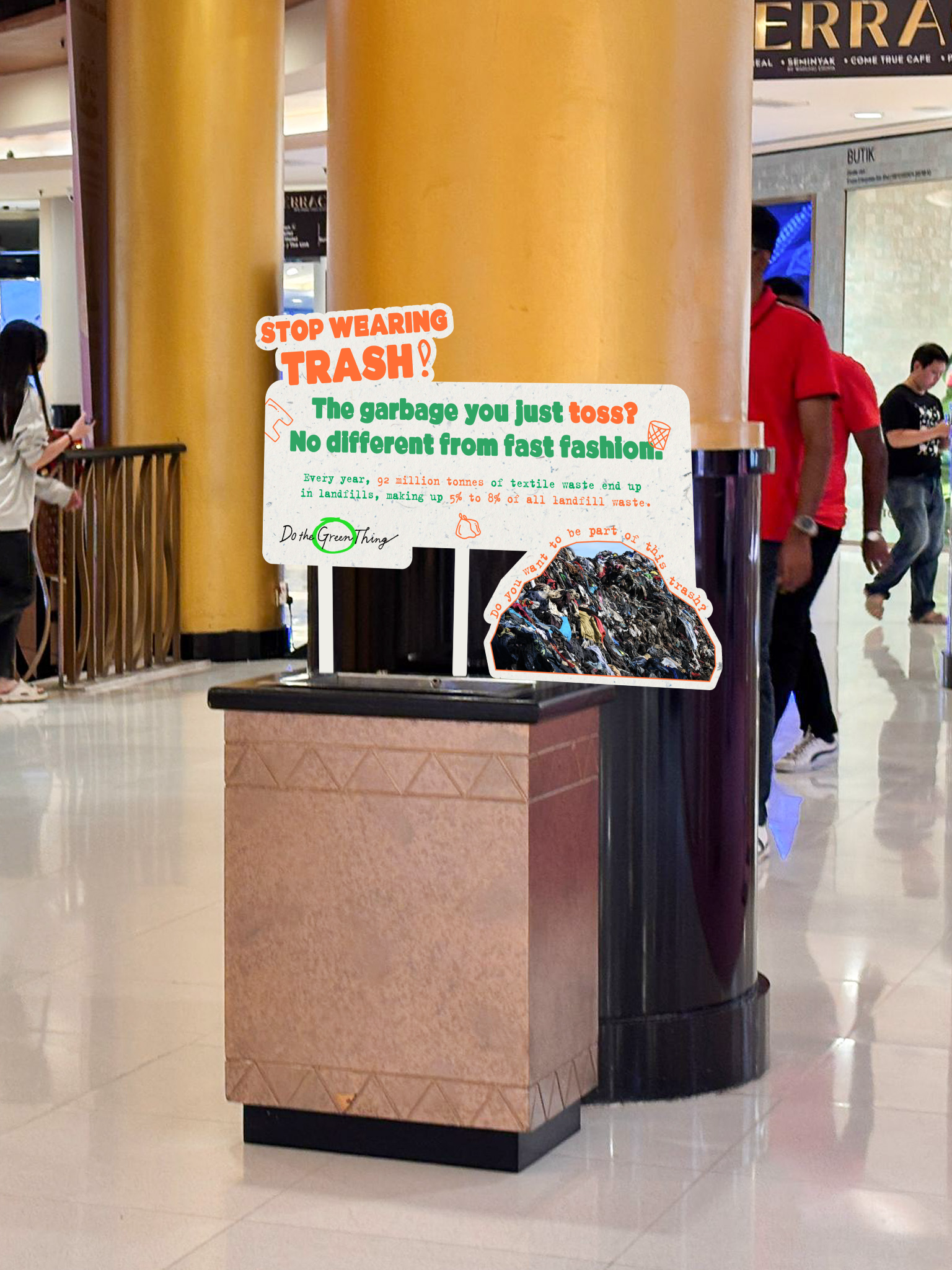
The trash bin becomes a symbol of fast fashion is quite literally trash, and encourages shoppers to be more conscious of their purchases.
Pop-Up
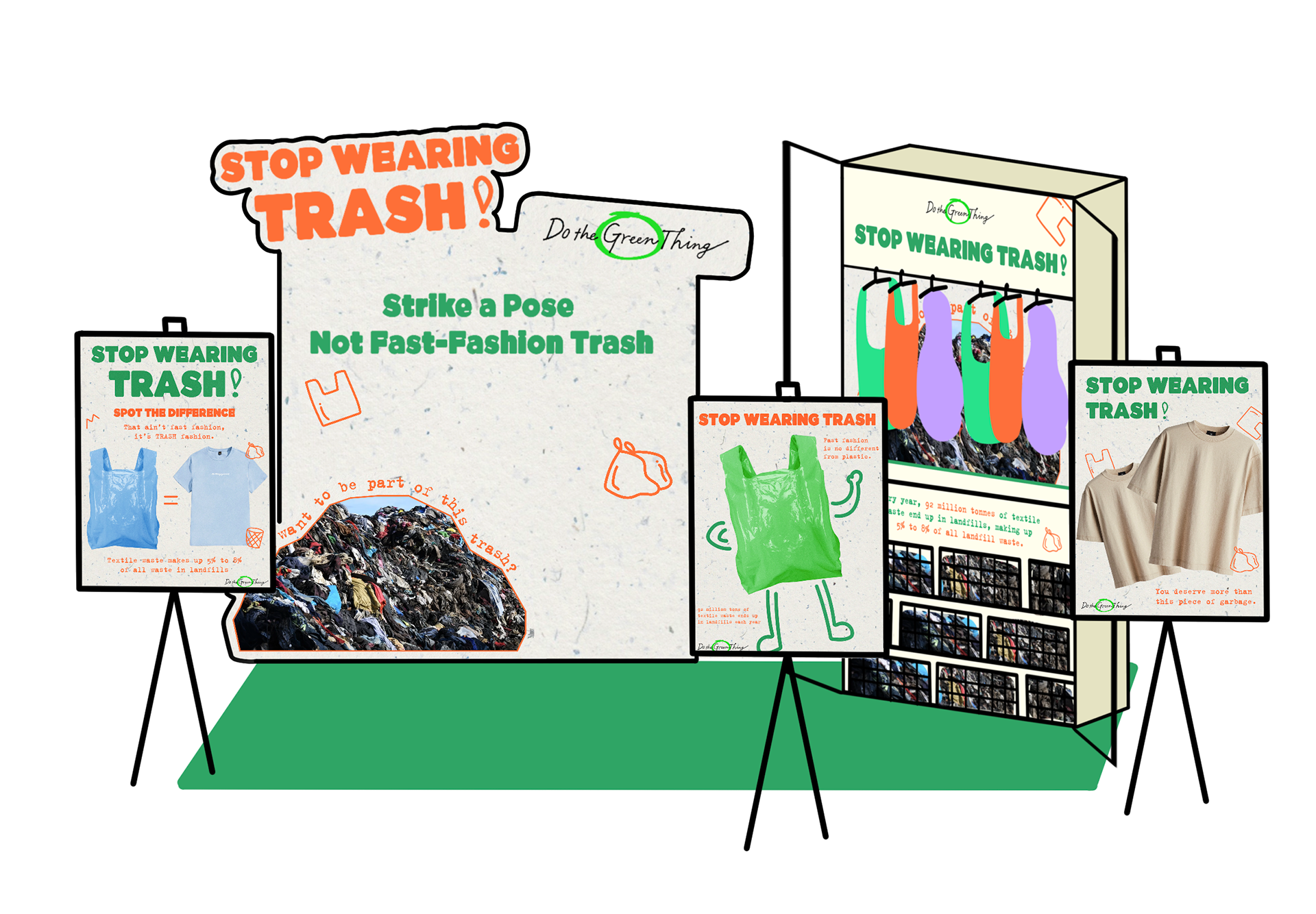
For the pop-up, we’ll bring the trash closet activation to multiple locations, accompanied by a photo booth where visitors can snap pictures and share them online to boost reach. There are also eye-catching posters around the pop-up to further draw attention and engagement.
Part 2: Digital Shock Activation
Original vs Fast Fashion Copy
Shein is widely seen as a dominant brand in the ultra-fast fashion market, notorious for copying designs from small creators, using low-quality materials, and exploiting poor labour conditions. Our research uncovered several of these stolen designs.
We also made our very own fast fashion brand, based on a playful mock of Shein, using a wordplay on the name: Sheout.

Social Media
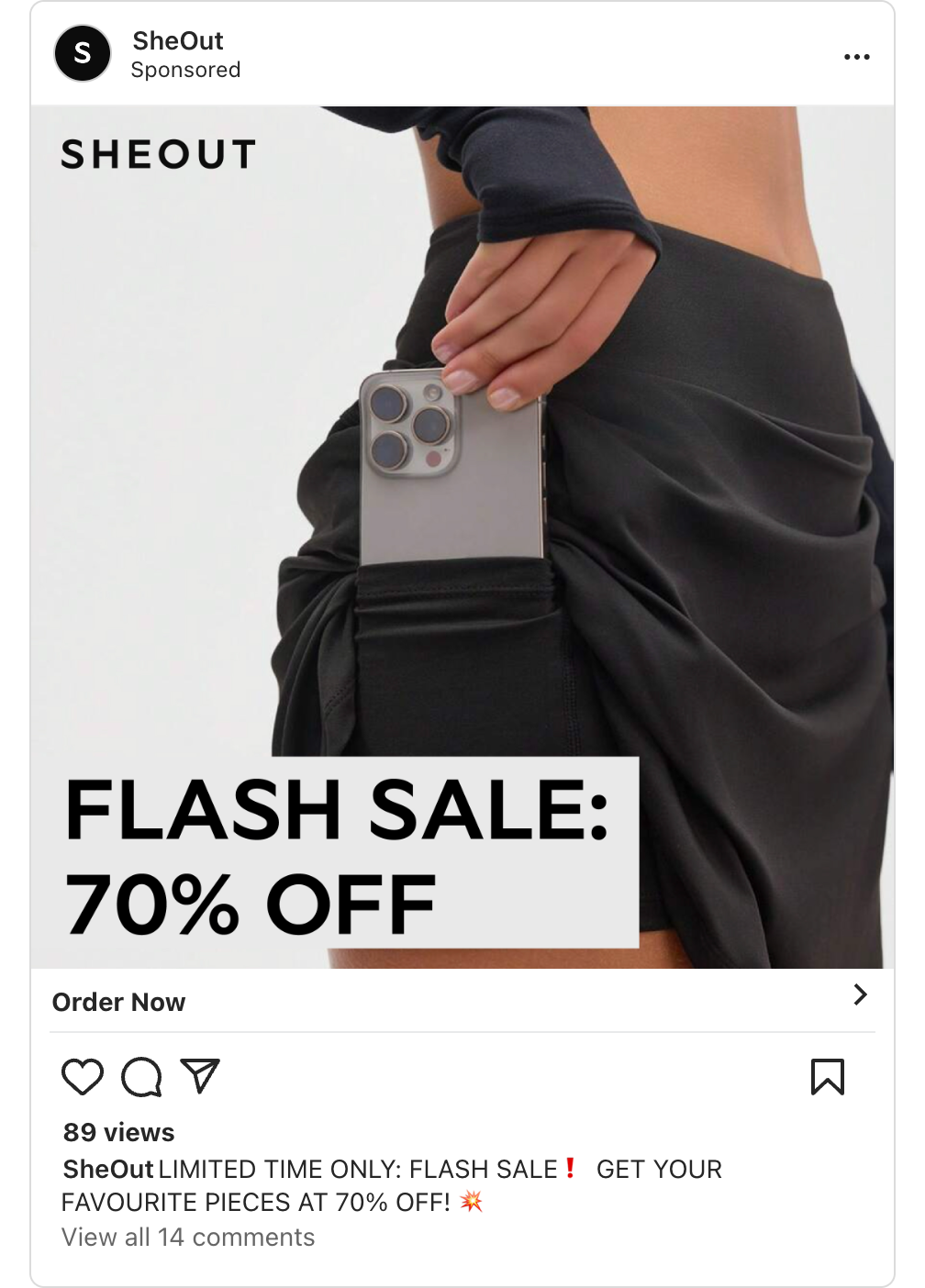
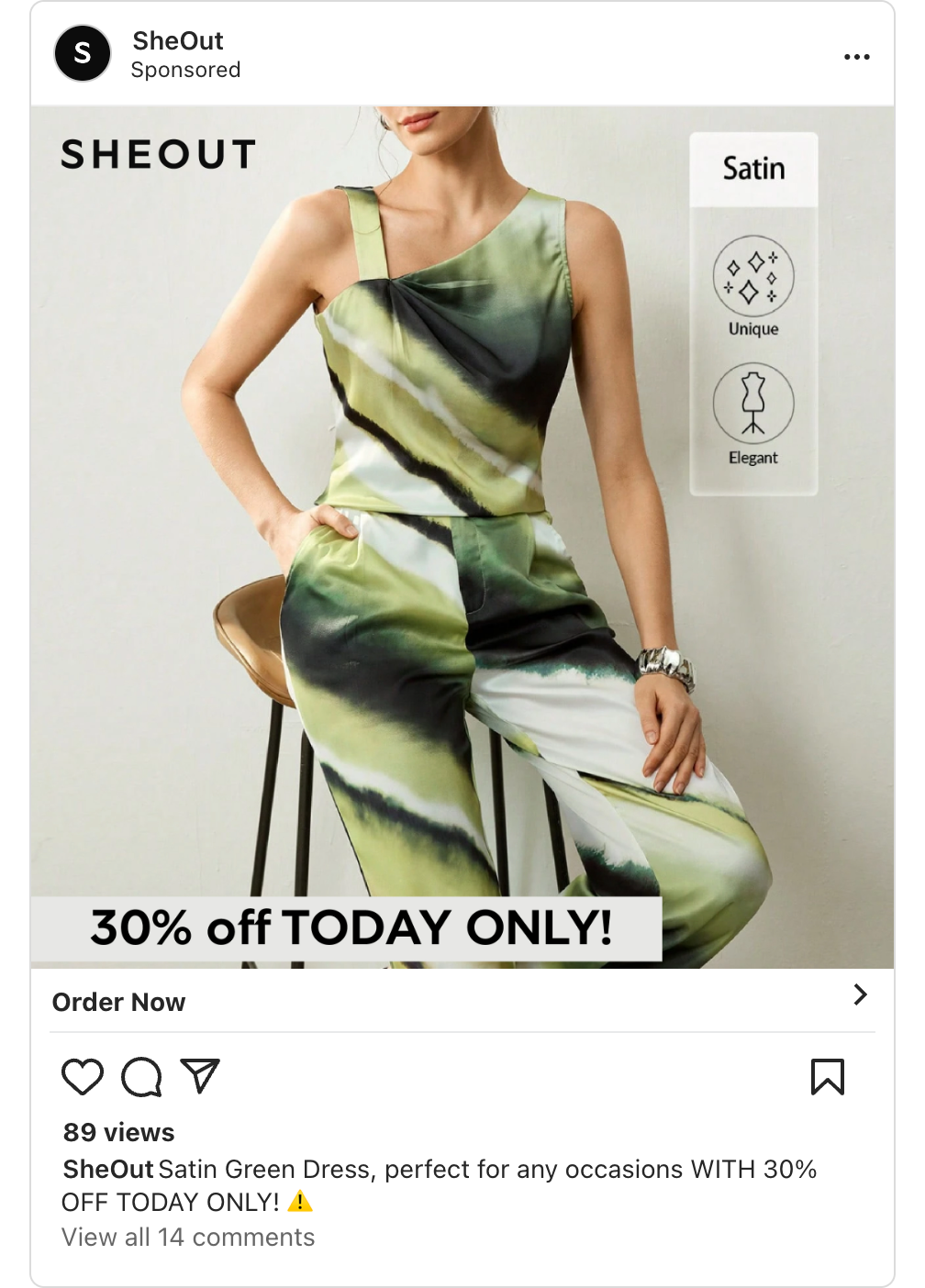
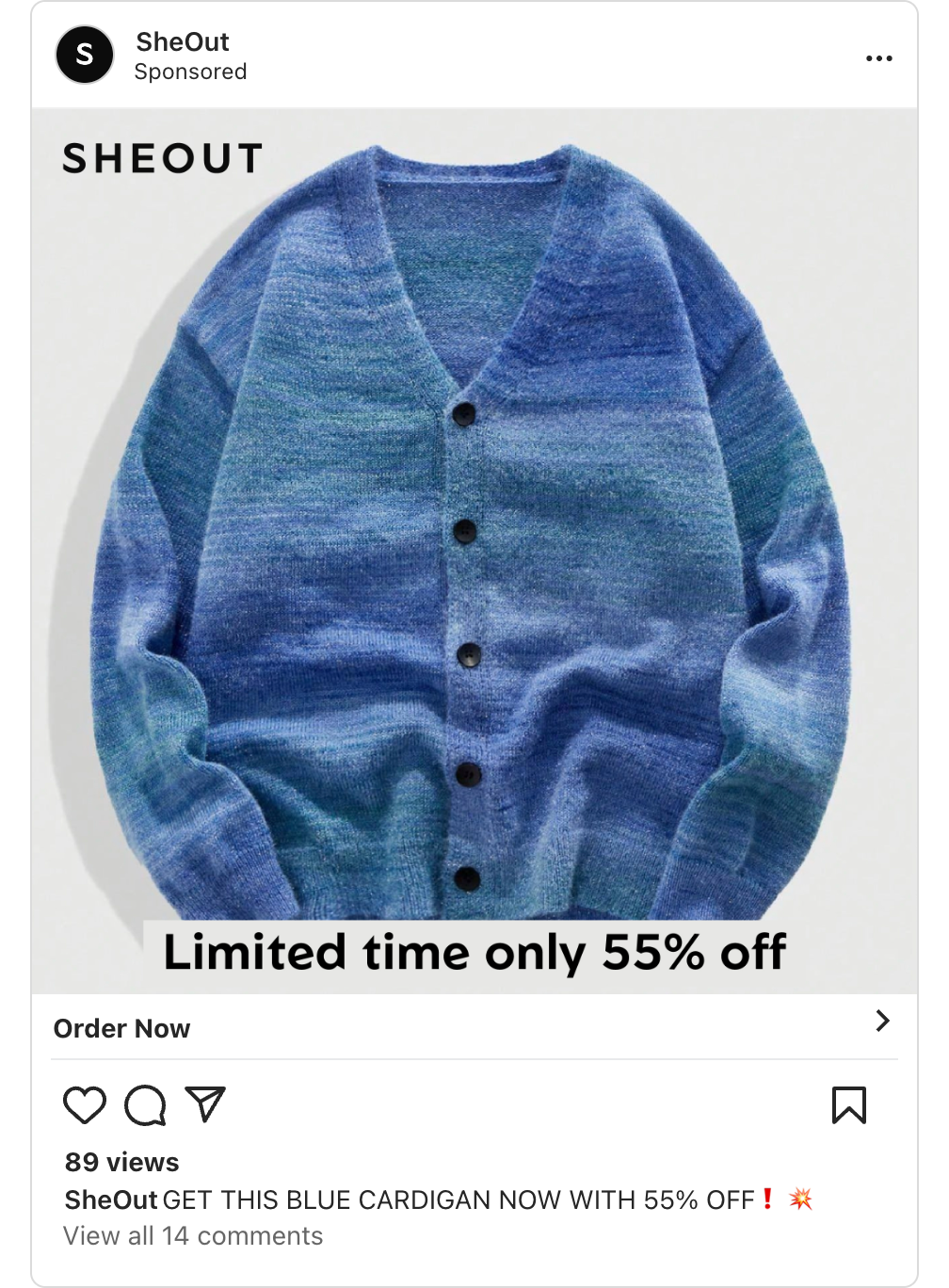
The fake fast-fashion ads are intentionally poorly designed to mimic the unappealing aesthetics of typical fast-fashion marketing. Clicking the ad directs users to a fake fast-fashion website.
Fake Fast Fashion Website
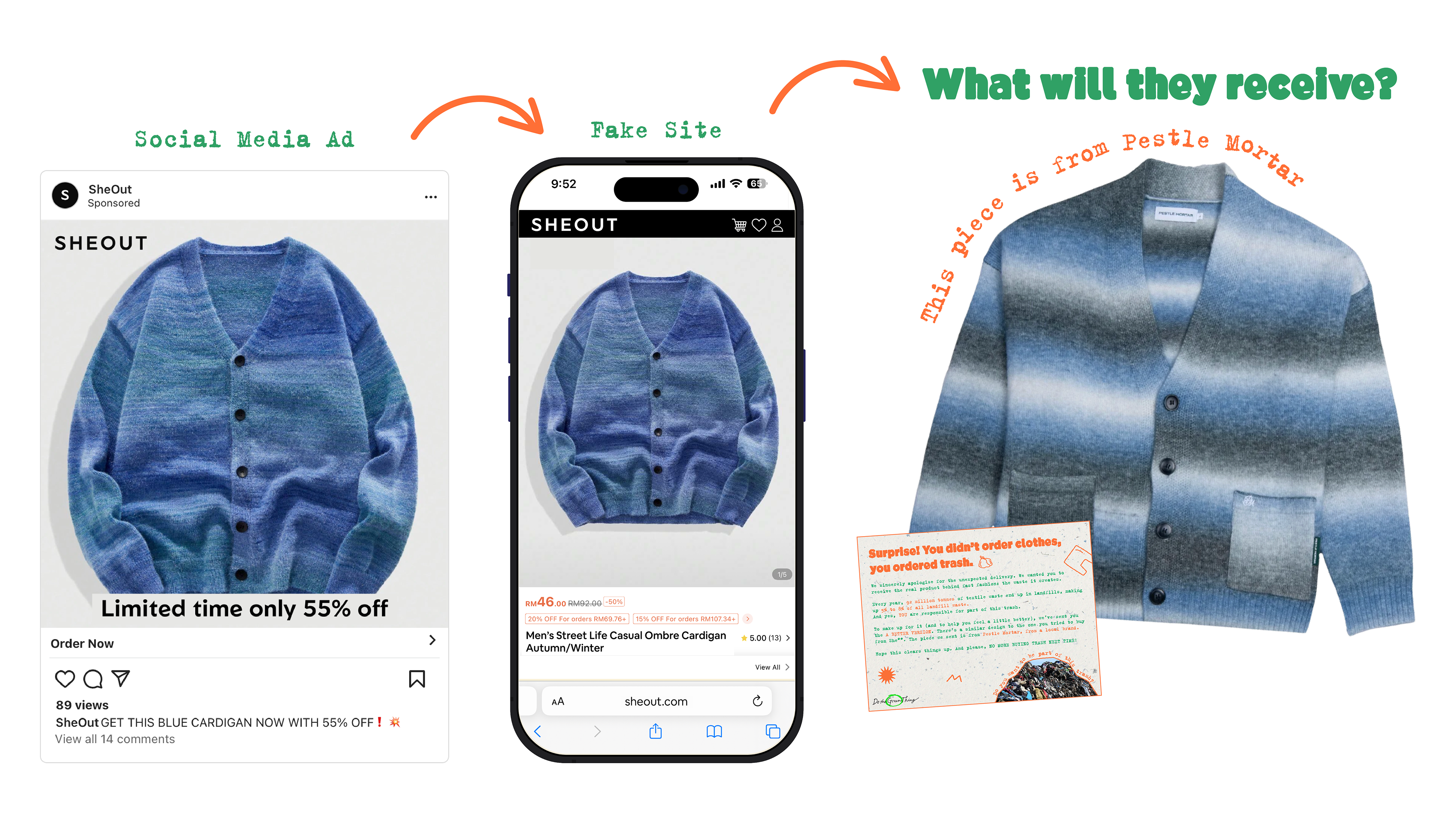
For items like stolen design, we’ll send the authentic piece along with a card explaining that the original design was stolen and crediting the rightful creator. For other items, we’ll also send a card and a similar piece created by a local designer. This will encourage users to stop supporting fast‑fashion sites.